




Stories from the Stage
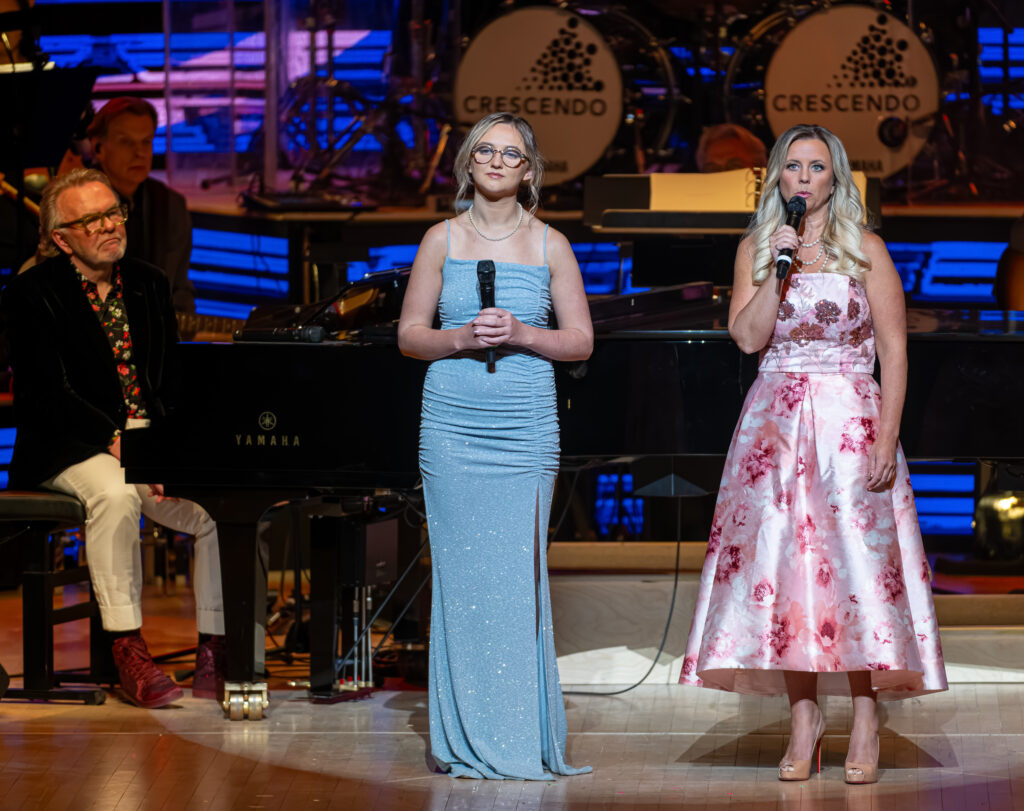
Let’s Talk About It
Stories From The Lobby

Asim
Fear/Uncertainty
I’ve come to learn that mental health affects all of us, whether we talk about it openly or not. Regardless of who you are or where you are, life can feel busy and high-pressure, and it’s incredibly easy to suffer in silence.
CRESCENDO creates space for honesty, vulnerability, and connection. It gives people permission to acknowledge what they’re carrying — whether that means reaching out for support or simply recognizing something within themselves for the first time. Sometimes just understanding that you’re not alone changes everything.
That’s what CRESCENDO has taught me — and why I believe it’s so important.
But I didn’t always have that perspective.
I’ve been incredibly fortunate to perform with John Cameron supporting many great causes as far back as 2009. As a singer and musician, John’s productions provide an experience and caliber of show that not many artists get the opportunity to be part of — ever.
At the start, CRESCENDO was an opportunity to perform — to be on a stage, to work with talented musicians, and to satisfy that part of me that simply loves performing.
In CRESCENDO’s first year, I remember John, Mannie, and Don asking the entire cast and crew, just as we finished our dress rehearsal, to raise our hand if we struggled with mental health. I raised mine mostly to fit in, not because I thought I did. I look back on that now a little differently, as I didn’t realize how much I would come to need this space.
A few years ago, I had my first child, and I was faced with thoughts, feelings and challenges that I never expected. I became immediately aware of how much there was to lose — losing my son, his mother, or both of them losing me. I never used to think about death, but it now the fear shows up even in life’s best moments. I struggle to be fully present knowing that experiencing joy to its’ fullest will make me think of the “what ifs” and the absolute absence of that joy. There are days where it has been hard to get out of bed and face the world, let alone trying to be the best father I can be.
Without CRESCENDO, I’m not sure I would have recognized or been able to acknowledge what I am experiencing. I can’t say what the experience would be like without it. What I do know is that in my work, my relationships, and especially in becoming a father, I’ve come to understand how important it is to recognize what’s going on internally — and to be honest about it.
What makes CRESCENDO so unique is that it’s not just about performing. It’s about creating a space where people can feel something more — where music and story come together in a way that allows both the audience and the performers to connect with themselves.
Even for those of us on stage, it’s not just about telling stories — it’s about living them, processing them, and at times, healing through them. Songs we’ve heard before become something shared — between the performers, the audience, and the moment itself.
Life is busy, complex, and often overwhelming. It’s easy to keep things inside.
But spaces like this remind us that we don’t have to.
If there’s one thing I’ve learned, it’s that you’re not alone in what you’re feeling — even if it feels that way. And sometimes, just knowing that is enough to take the next step forward.
Asim Chin
CRESCENDO
guitar/vocalist
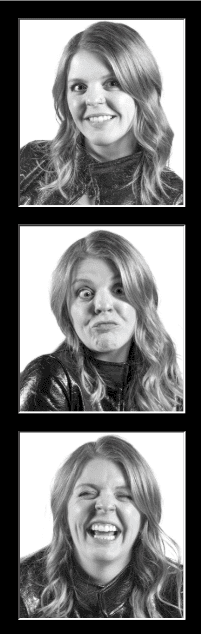
Kennedy
Grief/Anxiety
When I first considered reflecting on my own journey, I hesitated, feeling that my experience was far too common. But perhaps that is precisly the point.
We must share our stories because everyone inevitably encounters moments in life that catch us off guard, alter the trajectory of our thinking, or completely uproot what we once knew as normal.
I grew up in Edmonton alongside my sister, Kristen, who was four years older than me. We lived a typical life, navigating the standard ebbs and flows of a sibling relationship—which is to say, I was the annoying little sister. But as we matured, that dynamic shifted, and she became my best friend. We reached that effortless stage of closeness where a single glance across a room was enough to incite laughter; we baked together, dreamed together, and understood one another without a word.
When she was diagnosed with cancer, it became a battle our entire family waged together. My parents moved in with her and her husband to help raise her three young boys. Every weekend, after teaching, I would head out to the acreage to care for the children while everyone else rallied around to support Kristen.
On October 4, 2013, at the age of 30, my sister lost her battle.
As one might imagine, my world was upended. The life I had envisioned was suddenly gone. It is a jarring, life-altering realization to know that the person who knew you best will not be there to see you walk down the aisle, become a parent, or grow old.
This year marks thirteen years since she passed, and what I have learned is that grief never truly leaves us. Instead, it is something that grows and changes alongside us.
My approach to grief in the years immediately following her death was markedly different from how I handle it today. Initially, I became a master of distraction. I worked, I volunteered, and I even moved to another country the summer after she died. In my head, I was “grieving just fine,” but in reality, my morning commutes were filled with tears, and most nights, I would cry myself to sleep.
After the birth of my first son, Judah, I found myself catastrophizing situations—fearing outcomes that were entirely outside the realm of possibility—all stemming from the unresolved weight of my sister’s loss. I did not realize the root of this anxiety until I sought counseling, six years after Kristen had passed. It was during that period that I finally recognized the work I had yet to do. I had spent six years internalizing my pain rather than processing it. I had been skimming the surface of my trauma, offering a perfunctory, “Yes, my sister passed away,” before moving on—refusing to actually speak her name or share our memories.
In the beginning, I felt a pressure to mask the sadness that comes with loving someone so deeply. Today, however, my perspective has shifted. My faith has been an integral companion in walking through this grief, as has the act of finding outlets, like music, to help me sit with the discomfort.
I have learned that grief can be a beautiful thing. It serves as a profound reminder of the relationship we once had; though she is no longer physically here, she remains deeply embedded in my heart and my memories. I can now look back with gratitude, recognizing the depth of the beautiful relationship we shared.
It is often said that grief is simply the opposite side of the coin to love. We grieve deeply because we have loved deeply. When the weight of loss creeps in, I’ve learned to make the choice to look back and remember not just with sorrow, but with the gratitude that I had the privilege of sharing a life with my beautiful sister.
Kennedy Ramirez
CRESCENDO
piano/vocalist
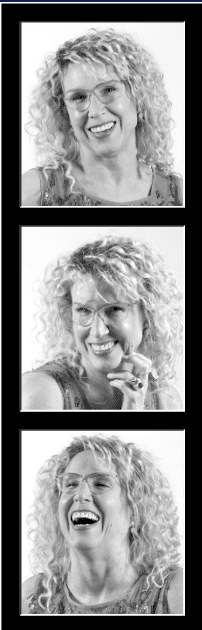
Shannon
Postpardum Depression
I had my share of pretty typical ups and downs as a young person…
but when I had my first child, the rug was ripped out from under me.
I only had a few weeks off to recover before going back to work, and found myself always close to tears. Crying on the way to work …on the way home from work. I began to think life would be easier for everyone if I just wasn’t around anymore. Simpler.
This went on for months.. in secret. I told no one. I pushed through… put on a brave public face and suffered in the quiet moments.
It was almost a year before someone close to me noticed and suggested that I might be suffering from postpartum depression and that my doctor could help me.
I got reached out to my family Dr. and the clouds began to part.
Talk about what's happening in the quiet moments... no matter how proficient you are at pulling it together in public.
Shannon Tyler
CRESCENDO
vocalist
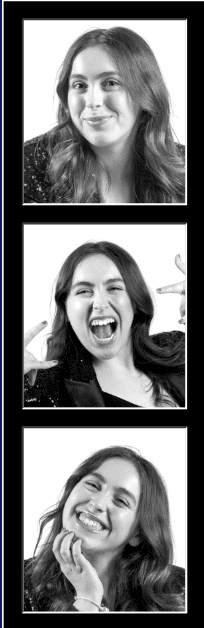
Kaiya
Pandemic-induced Anxiety
I was always a happy and supported kid growing up. I have loving parents who would give the world and more to me, an incredibly fun and positive schooling experience, and a group of friends who I loved and a passion for music that brought me unexplainable joy. This began to shift when the pandemic hit.
I was 13 when we were told to go into lockdown. My mom is an emergency physician and my dad at the time was a pilot with STARS air ambulance, so when most of my peers were staying home with their families, my parents had to ‘run into the burning building’ when everyone was running away from it.
I still remember the tightening of my chest I’d feel when my mom was at work, knowing she was treating patients with the illness people were dying from all over the world. Same with my dad who had to wear a massive, gas mask like looking contraption on his face when flying the helicopter because people with COVID were in the back fighting for their life.
Because of my parents profession, I stayed in online school for 2 more years after the lockdown was lifted. My key formative years of 13-15 were spent talking to black boxes on zoom. No faces, just names, and consequently I began feeling deep isolation. My friends who I once felt I’d know for the rest of my life were attending in person school and becoming people I didn’t talk to anymore or even recognize. I was constantly comparing myself to others on social media, and I felt my extroverted, bubbly self slowly slipping away.
In those times where I felt so alone and different from everyone else, music was my safe space. I spent most of my time at the piano, singing my favourite songs, writing my own music and developing my craft. It was during this time where I truly and fully realized the immense power music has to heal. It speaks to everyone in the world, no matter what language you speak, country you come from or struggles you have. It’s a universal medium of expression, and it saved me.
When performances were stripped away from me at the beginning of quarantine, it made me face the music (literally), and realize the fact that music was my only path in life.
There was no plan B. I worked harder than I ever have in those 2 years. I was determined to make my dreams a reality, and more than that, I was certain that one day, the music I was writing would touch someone’s life and make a difference, the same way it did for me.
Now, fast forward, I’m 19, and I’ve been able to open for artists I listened to in those years. The same girl who couldn’t leave her house has now travelled across Canada sharing my voice and my music, and I have developed a fan base in countries all over the world.
Perhaps the most meaningful is when fans share what song of mine has touched them the most, and more often that not, it is “Polaroids”. This is a full circle moment for me as I wrote Polaroids in the pandemic, alone in my basement, about the isolation and fear I felt watching my friends move on without me. To know it has comforted others in the same way it did me as I found a way to express my feelings has meant everything to me as an artist and as a human being.
If I can leave you with anything from this story, it is that no matter how hard and dark it may feel now, there is always a light peeking out from behind the clouds and things truly do get better.
As challenging as those times were I now look back with a deep gratitude. Without that shock of quarantine, I truly believe I wouldn’t have realized music was what I wanted to do as a career. That ‘aha’ moment has opened doors for me that I never imagined possible. Watching my parents walk out the door everyday not knowing if they’d come back makes me thankful for every moment I spend with them now.
Last of all, every time I step on stage, I do so with the intention that maybe there is one person who needs to hear me sing, and maybe in that moment I can make them feel seen, heard, and a little less alone in what they may be going through.
We are all connected, and music is a gift that brings us all together.
Kaiya Gamble
CRESCENDO
vocalist

Kickstand Leader
Generational Trauma
My life didn’t start easy.
I was very young when my parents separated, and for most of my childhood, I was raised by a single mom. She did the best she could with what she had, but what she had was shaped by generations of trauma.
On my mom’s side, my family’s story is deeply connected to residential schools. My grandma, great-aunties and great-uncles, and many relatives before them endured things no one should ever have to experience. That pain didn’t just end with them. It carried forward, into their children, and into my life.
I grew up surrounded by the impacts of that trauma. Alcoholism. Substance use. Houselessness. Racism. Crime. Incarceration. But those aren’t the things that define my family. They were people who were hurting. People who made choices based on what they knew and did what they had to do to survive. Support wasn’t something they had access to, and healing wasn’t something they were shown how to find.
My mom stayed away from substances, and for that I’m grateful. But the trauma she carried still showed up in our home. From a young age, there was a lot of anger. A lot of yelling. And a lot worse. By the time I was 10, I felt like I was on my own. My dad wasn’t around. My grandparents tried, but it became too much for them, and eventually they moved away. I was left to figure things out for myself.
So, I did.
I decided early on that I wanted a different path. I stayed focused on school. I leaned on friendships. I found safe spaces where I could: teachers, school counsellors, my doctor. I started working as soon as I could, building independence piece by piece. But even then, I carried a lot inside. I worried about my family constantly. I felt the weight of everything I came from, even as I tried to move forward.
I moved out on my own at a young age. Eventually, I built a full-time career, and for the first time, I had access to something my family never did: health benefits. That’s when I started therapy. I ended up seeing a psychologist, whose office I used to walk by on my way to work. They taught me techniques like grounding and STOP, to help during anxiety attacks. We also did a lot of talk therapy, because at that point in my life, I hadn’t shared my past with someone who could help me process it.
For the first time, I began to understand my life, where I came from, how it shaped me, and why I felt the way I did. I was also diagnosed with generalized anxiety disorder and depression. I tried medication, but it didn’t work for me. So, I kept searching. I found mindfulness. Meditation. Yoga. Breathing techniques. Small, daily ways to calm a mind that had been racing for years.
And slowly, things started to shift. A few years ago, I committed to therapy more consistently, after the loss of a family member. I found this therapist through my workplace’s employee assistance program. They we’re my support and helped me bridge a connection between me and spirituality, helping me navigate my grief. That, combined with everything else, brought real change in my life. For the first time, I felt like I could breathe. Like I could focus. Like I wasn’t just surviving.
I began to understand something powerful:
I am not my family.
I am not my past.
I am not my upbringing.
Today, I have support. Real support. There was a time recently where I was feeling lost again. I went to my doctor, who referred me to therapy through the PCN. I was connected with a therapist who truly changed my life. I would consider that experience similar to peer support. I didn’t need fixing. I needed to be heard. To be validated. They helped guide me in the right direction and be the voice of reason. They helped me more than I can put into words, and I’m happier than I’ve ever been. And it’s something I will carry with me for the rest of my life.
Mental health care, therapy, support, connection, shouldn’t be something we only turn to in crisis. It should be part of how we take care of ourselves, just like our physical health.
Because healing doesn’t just change one life. It changes generations.
I share my story in the hope that someone else sees themselves in it.
And knows that support is out there.
That healing is possible.
And that it’s okay to ask for help.
For the record, I love my mom, and as an adult, I have a beautiful relationship with her.
This is my story
Kickstand Leader
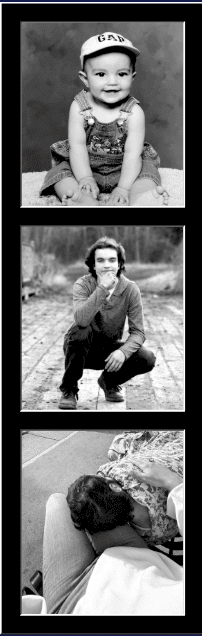
Ceileb’s Story
Bipolar Disorder/Schizophrenia
This is Ceileb’s story.
Ceileb was a vibrant, fearless, and deeply passionate boy. He loved sports, music, and adventure. He was the kind of kid who lived life fully, whether diving from towering platforms or playing guitar by ear in our living room. For many years, we lived what felt like a perfect life.
But when Ceileb reached his early teens, something began to change. The spark we knew so well started to fade. He became withdrawn, struggled in school, and began to lose interest in the things he once loved. We sought help from doctors, therapists, and specialists, but time and again, we were told the same thing: “He’s just a teenager.” …But he wasn’t.
Ceileb was living with undiagnosed Bipolar Disorder and Schizophrenia, eventually he turned to addiction to cope with what he couldn’t understand or express. For years, we fought for help through hospitals, crisis teams, and mental health services. But the system was fragmented. No one worked together. No one saw the full picture.
When he was finally diagnosed, we saw hope. But without consistent, long-term support, that hope was difficult to sustain. Ceileb spent years cycling between hospitals, recovery attempts, and the streets. Despite everything, he never stopped trying.
In April 2025, Ceileb was hospitalized after an overdose. This time, he didn’t come back. Surrounded by love and heartbreak, we had to say goodbye.
I share this story not to leave you in sadness, but to ask for change. No family should have to fight this hard just to be heard.
Crescendo is about Getting Louder and louder, so that we can no longer be ignored. We need to break the stigma around mental health and create a better plan to help those who are suffering. Mental health deserves the same urgency, compassion, and professional coordination as any other medical condition.
I promised Ceileb I would tell his story and his story is getting louder. I hope his story becomes a spark for awareness, for compassion, and for a better system, so that no one else is lost the way he was.
Sherri Stace
Ceileb’s Mom
Resources
24/7 Helplines
Addiction Helpline Call 1-866-332-2322
Provides support, information and referrals to Albertans experiencing addiction concerns.
Mental Health Helpline Call 1-877-303-2642
Provides support, information and referrals to Albertans experiencing mental health concerns.
CMHA Edmonton Distress Line Call 780-482-HELP (4357)
Provides crisis intervention, emotional support and resources.
Suicide Crisis Helpline Call or text 9-8-8
Provides crisis support and suicide prevention.
Support for Young People
Kickstand Connect
A confidential virtual clinic tailor-made for Alberta’s young people.
Kids Help Phone
Call 1-800-668-6868 or text CONNECT to 686868 for mental health and well-being support for kids.
CASA
CASA Mental Health is an independent, accredited non-profit provider of mental health treatment for Alberta kids aged three to 18 and their families.
In Person and Walk-In Support
Access 24/7 Call 780-424-2424
Access 24/7 is a “one-stop shop” for adult addiction and mental health services in Edmonton. Patients can access a range of urgent and non-urgent addiction and mental health services including service navigation, screening, assessment, referral, consultation, crisis intervention, outreach and short term stabilization.
Urgent Mental Health and Crisis
This clinic in Calgary, offers immediate assessment and single-session therapy for crisis situations such as depression, anxiety, or overwhelming stress.
Kickstand Hubs Call
Kickstand hubs across Alberta, offer free mental health, substance use, peer support, and other wellness services for young people ages 11-25. FIND A HUB NEAR YOU
The Summit: Marian & Jim Sinneave Centre for Youth Resilience
The Summit in Calgary offers walk-in mental health services for anyone under 18 years of age and their family. The Centre also offers therapeutic support through a day hospital and community-based treatment.
Other Resources
Mental Health Foundation
Family Violence Find Supports Call or Text 1-780-310-1818
Provides resources for where to turn when faced with family violence or domestic violence.
Crisis Text Line – Text CONNECT to 741741
Provides free, 24/7, high-quality text-based mental health support and crisis intervention to support people in their moments of need.